Get the latest trading insights, tips and strategies straight to your inbox.
Blog
The Prop Firm Rules That Fail Most Accounts
Traders rarely fail a challenge because their strategy is bad. They fail on rules they did not read.
Read Full Article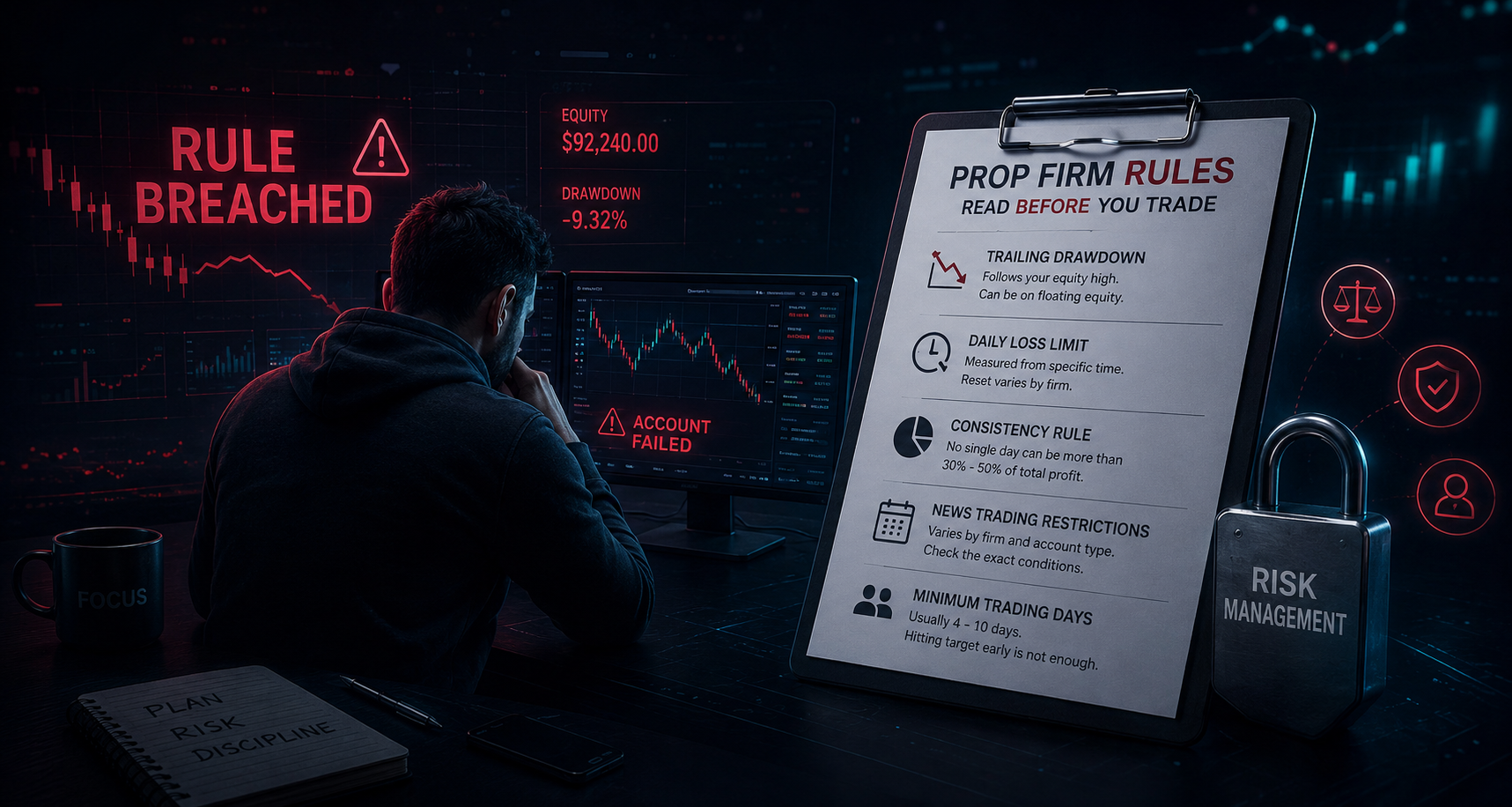
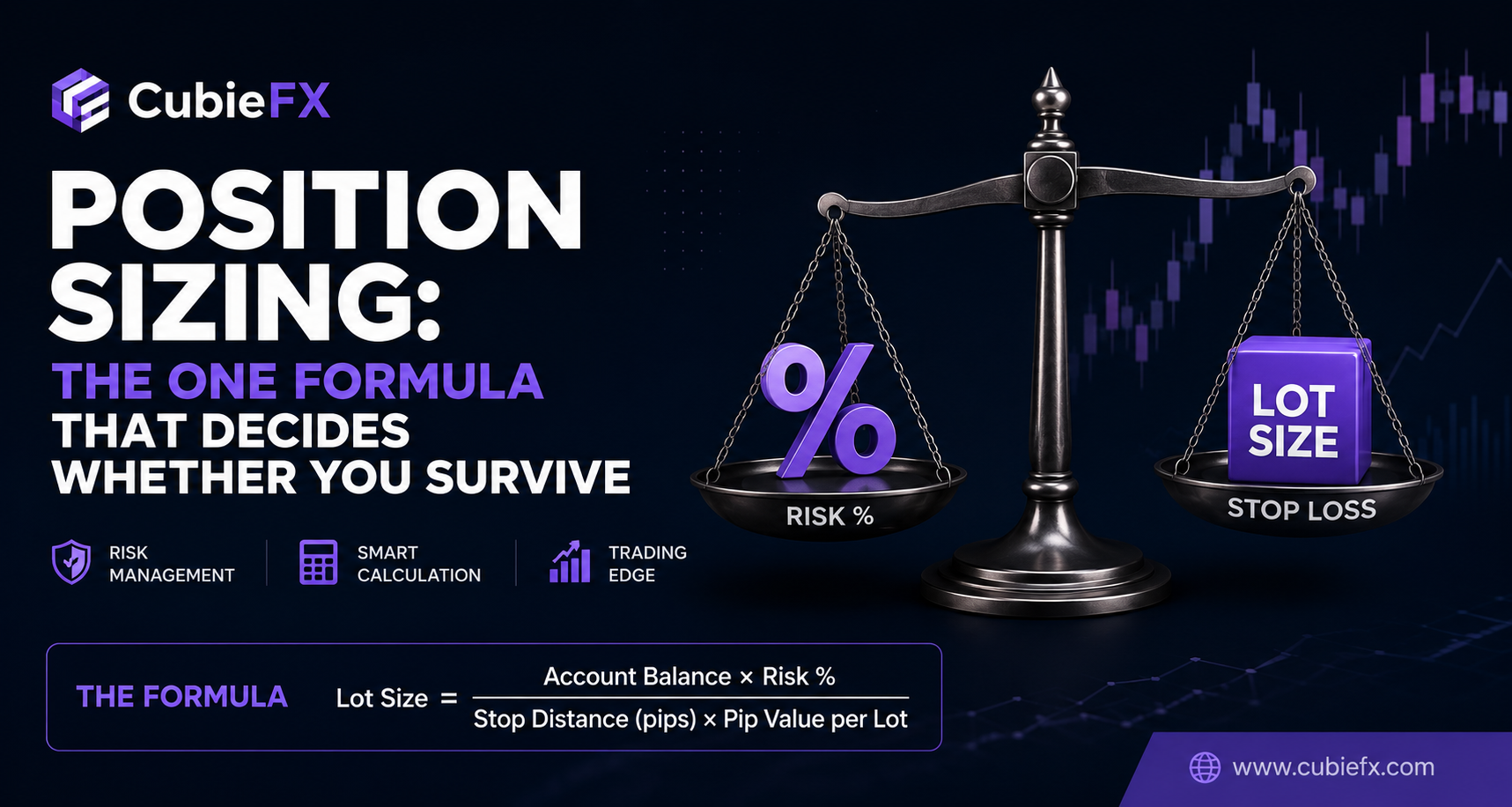
Position Sizing: The One Formula That Decides Whether You Survive
Entries get all the attention. Position size decides whether you are still trading in a year.
How to Start Forex Trading: A Practical First Guide
Most beginners start with the wrong question. The right question is not which currency to trade, but whether you understand what you are risking before you do.
Smart Money Concepts: What They Are and How to Use Them
SMC has become one of the most searched trading frameworks. Here is what it actually says, what it predicts, and where it has gaps.
Bitcoin ETF inflows hit $3.8B in strongest three-week stretch of 2026
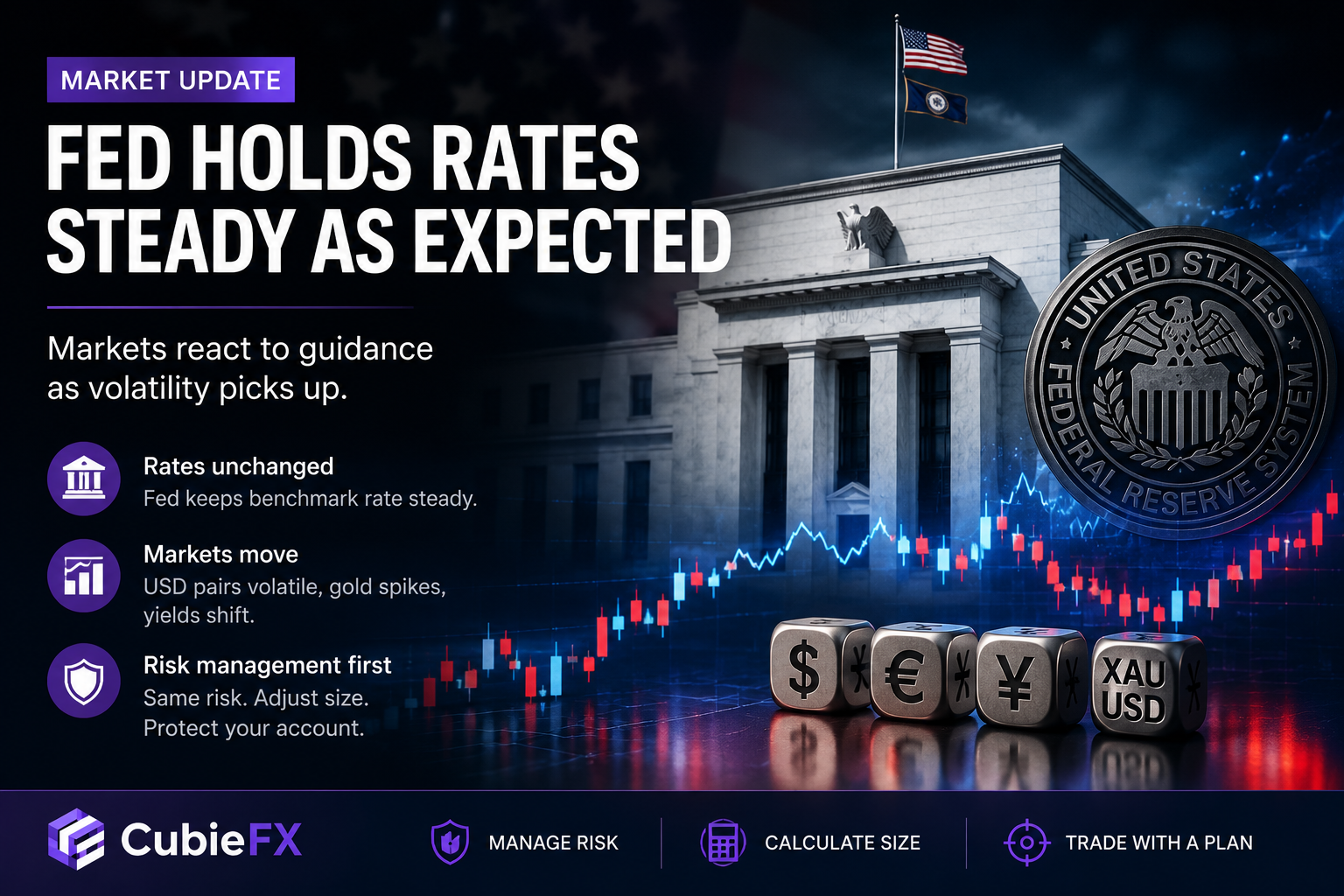
Here are the five big takeaways from this week's Fed meeting
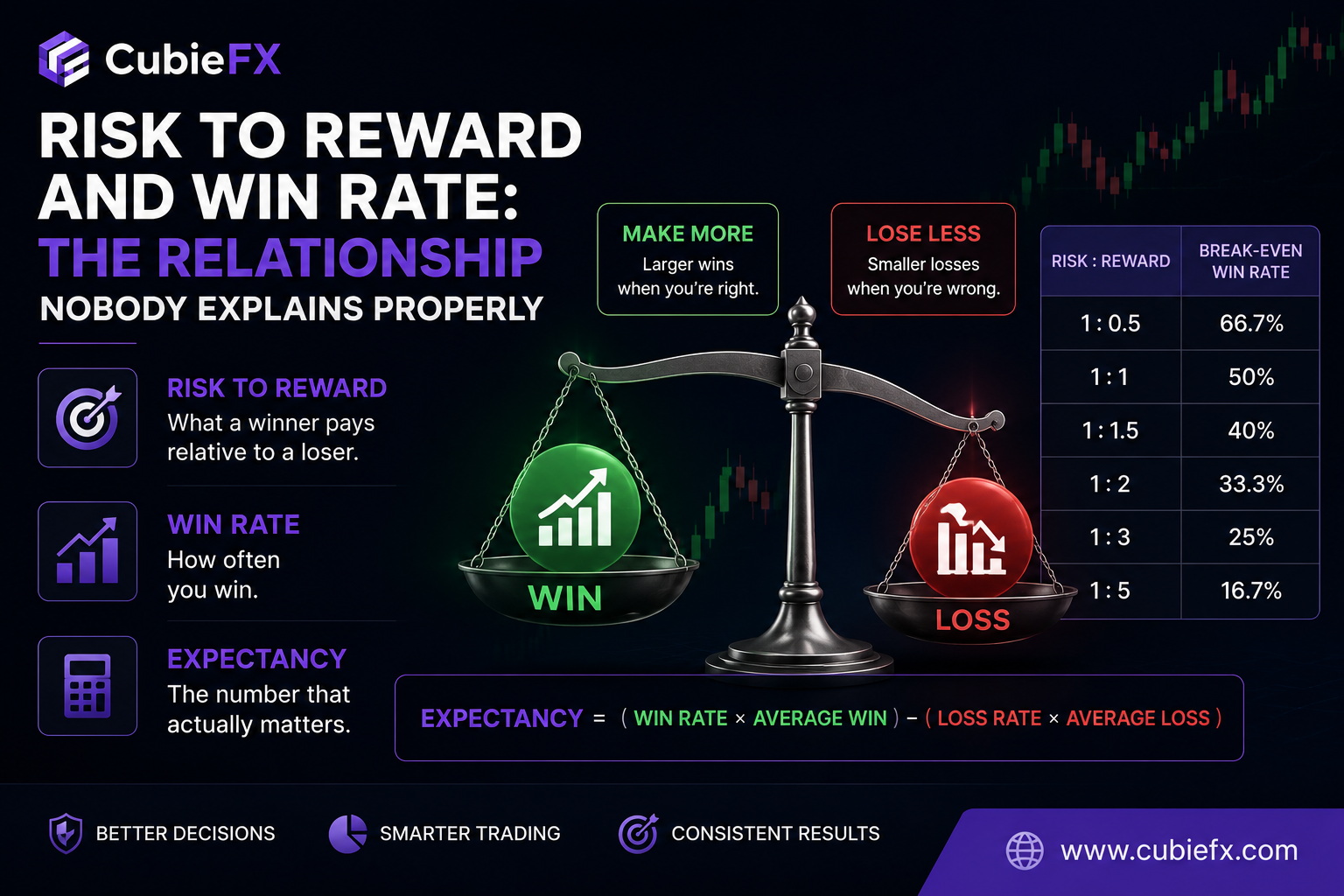
Risk to Reward and Win Rate: The Relationship Nobody Explains Properly
Win rate on its own tells you almost nothing. Paired with risk to reward it tells you everything.
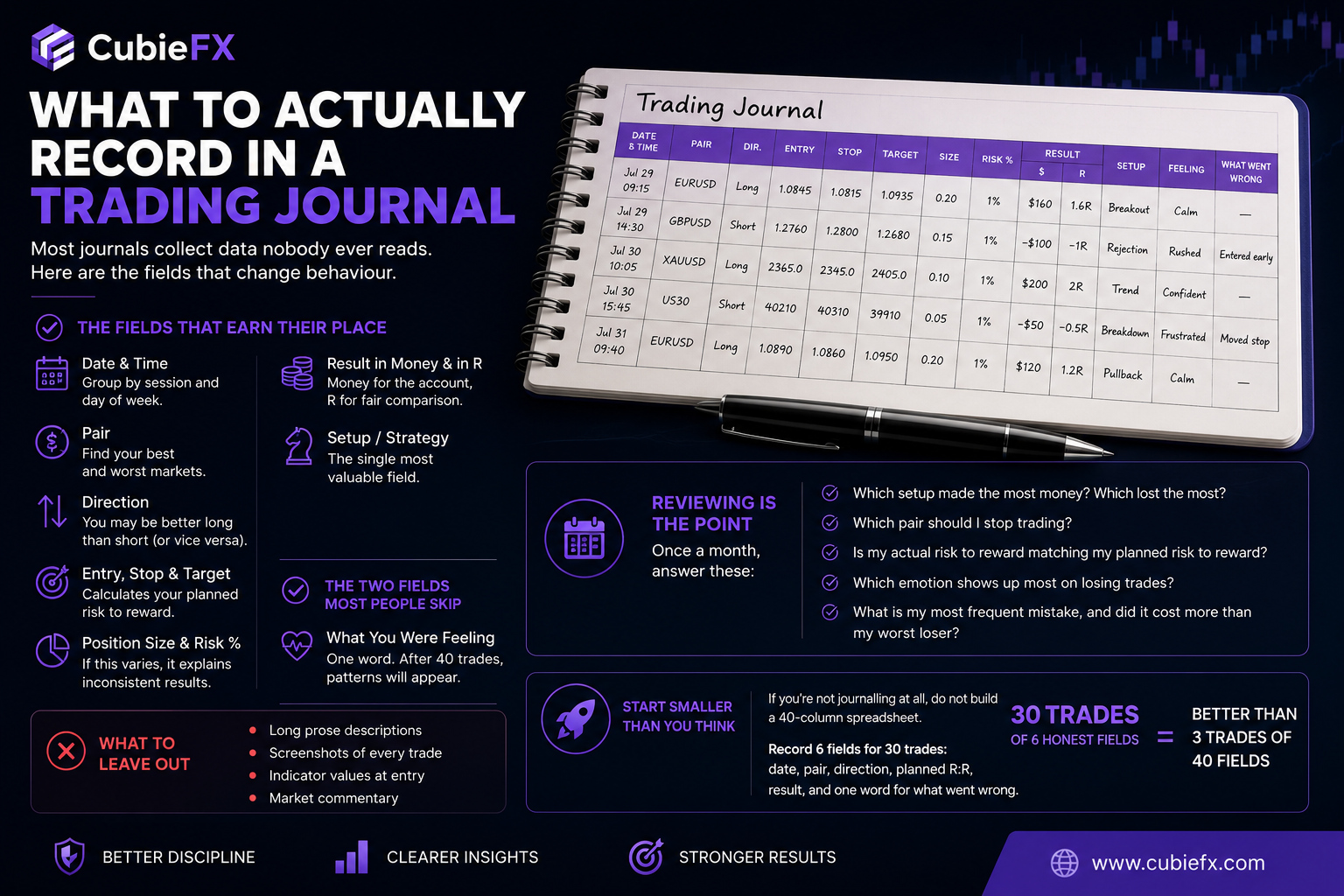
What to Actually Record in a Trading Journal
A journal is only useful if you can answer a question with it. Most journals cannot.
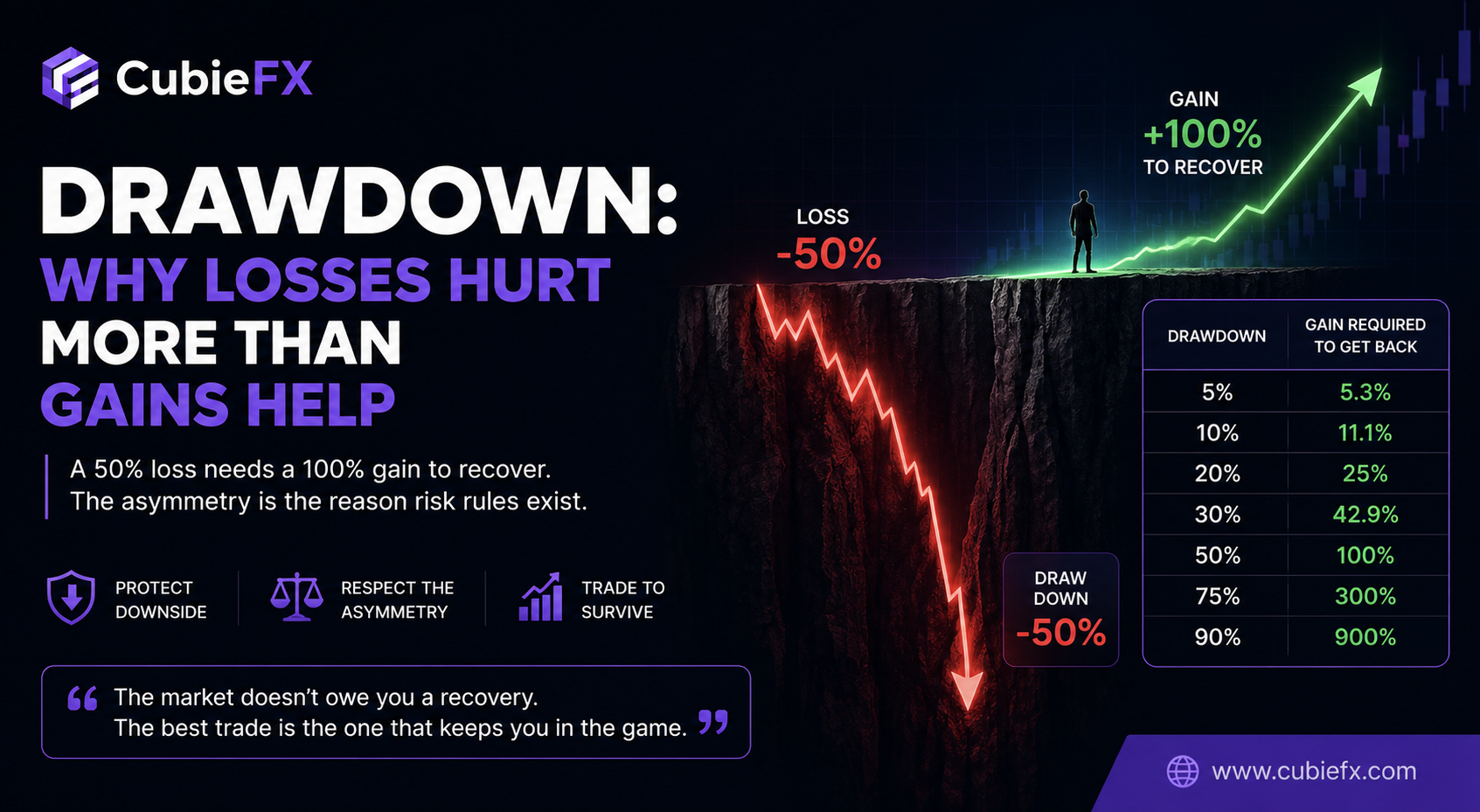
Drawdown: Why Losses Hurt More Than Gains Help
The arithmetic of recovery is unforgiving, and it explains almost every rule professionals follow.
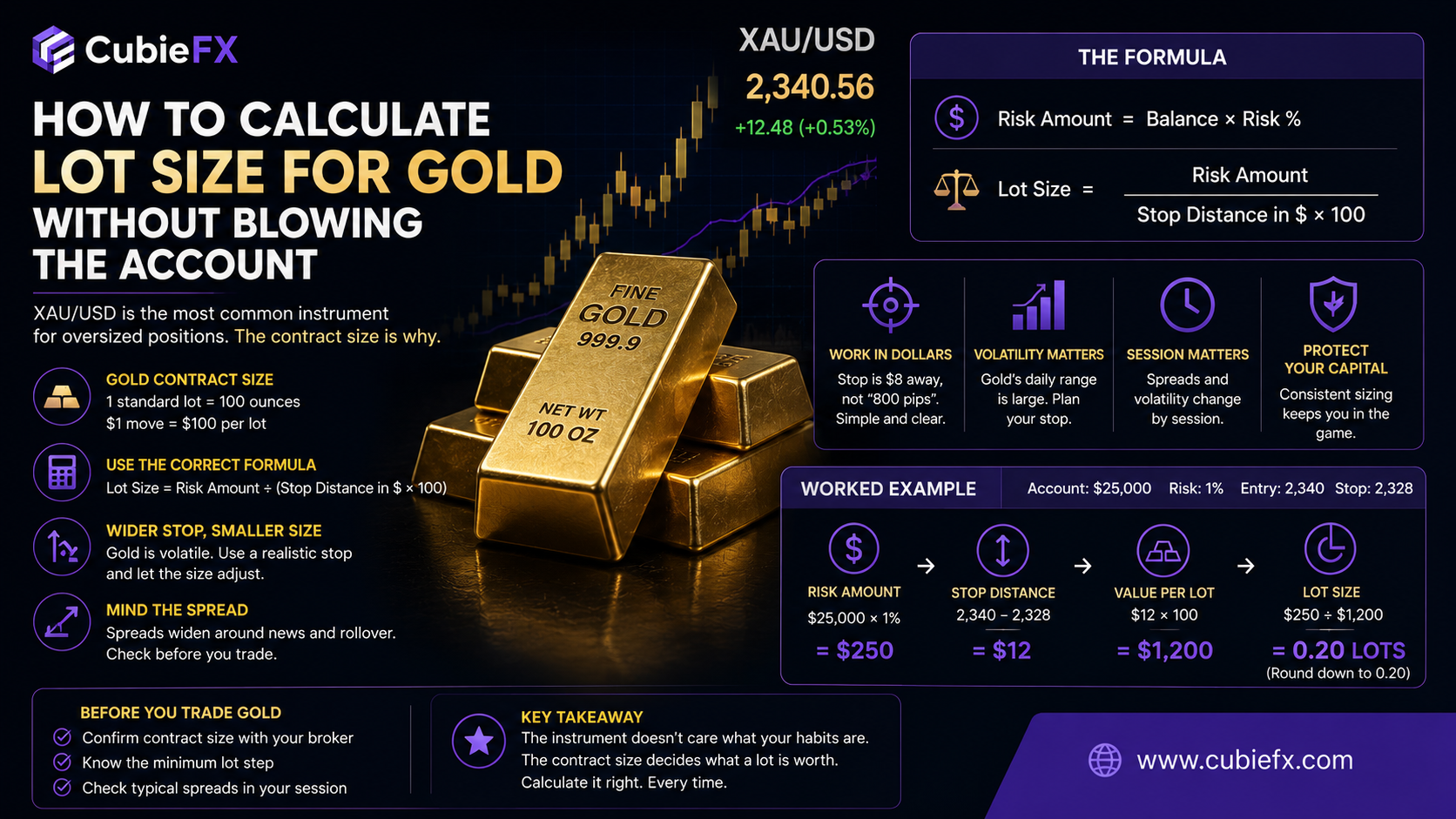
How to Calculate Lot Size for Gold Without Blowing the Account
Gold uses a 100-ounce contract, not 100,000 units. Getting that wrong is a factor-of-ten error.
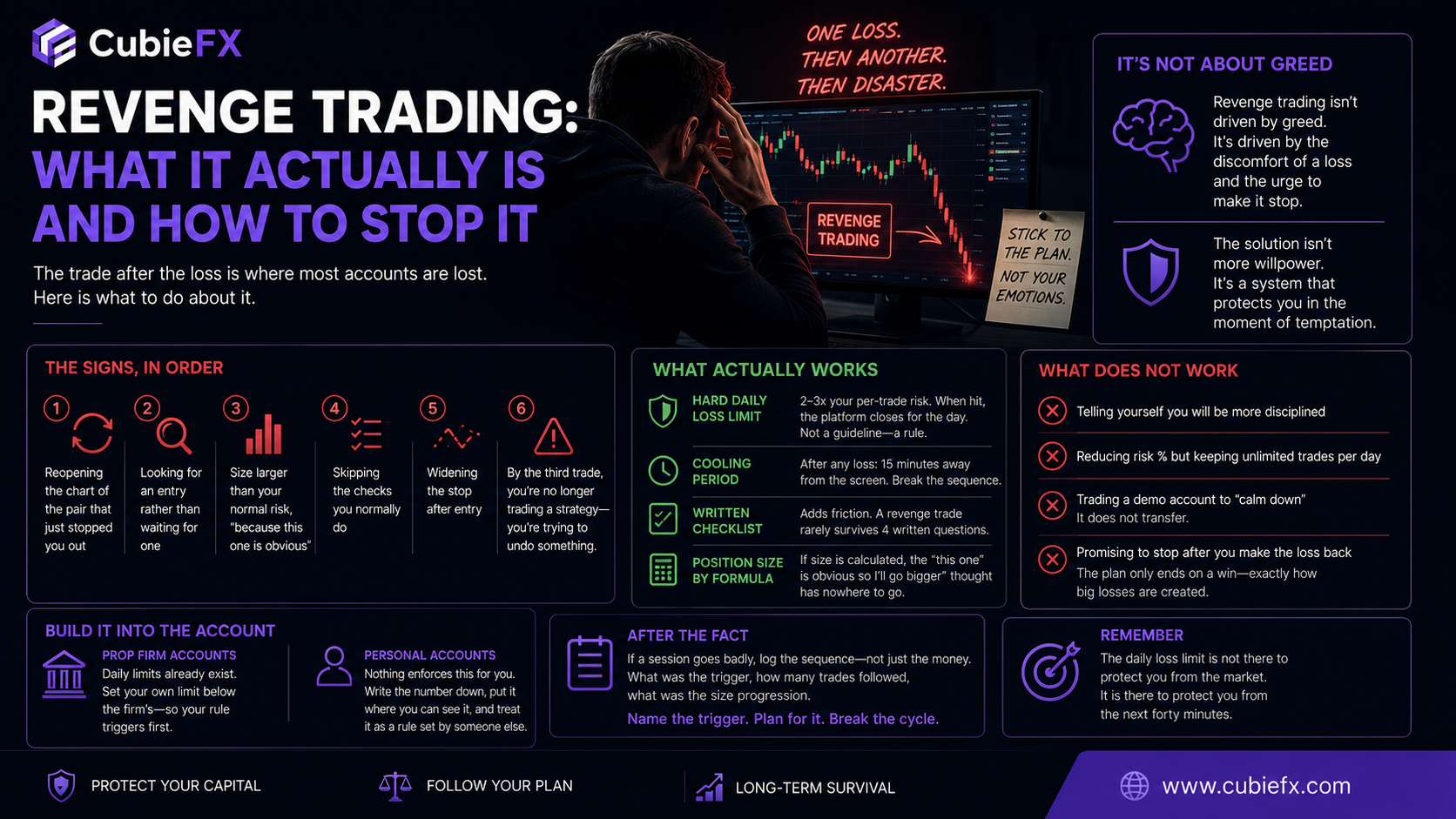
Revenge Trading: What It Actually Is and How to Stop It
It is not a character flaw. It is a predictable response, and it can be designed around.
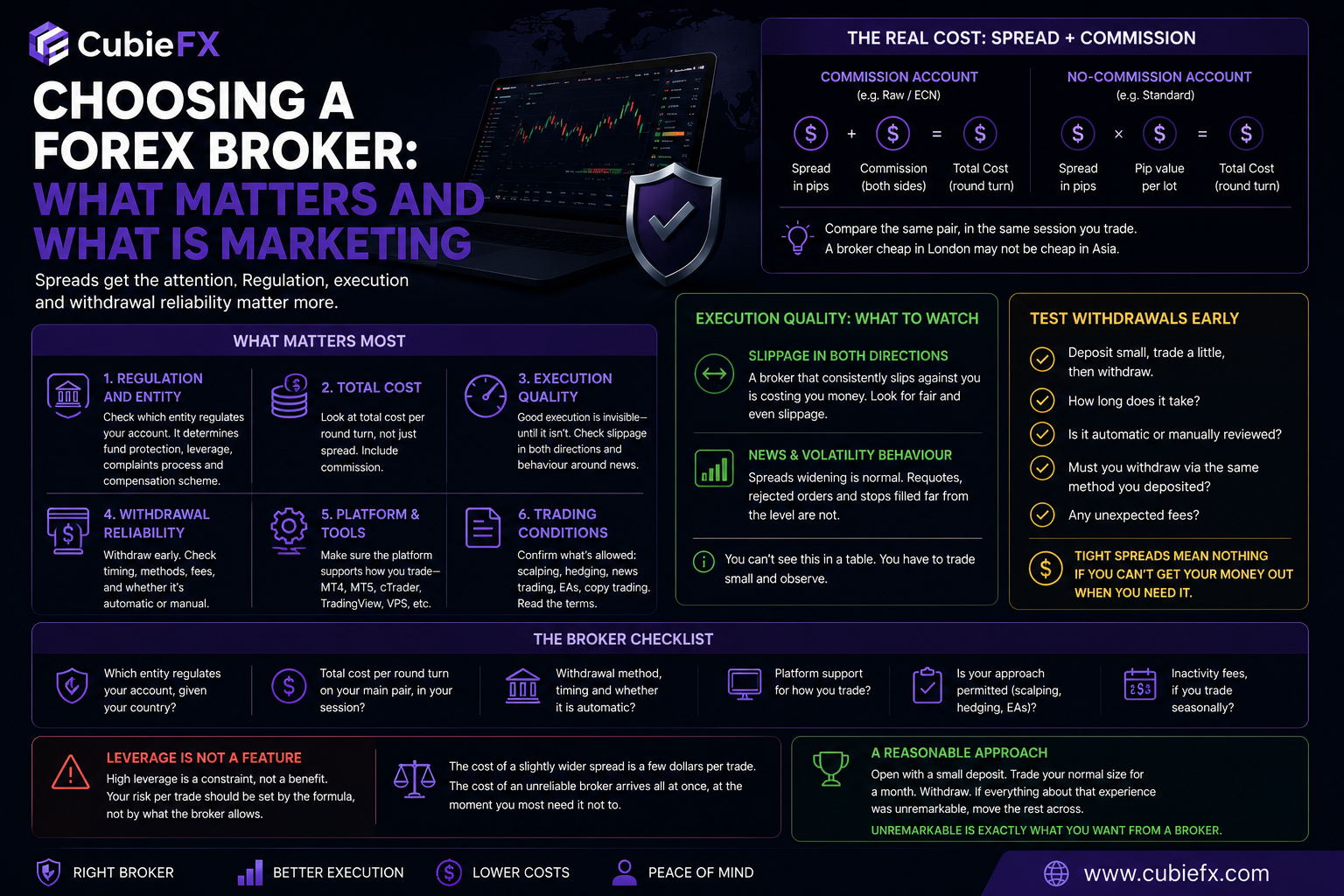
Choosing a Forex Broker: What Matters and What Is Marketing
The cheapest broker is not the same as the best one, and the difference shows up at the worst time.
What Is Leverage in Forex and Why It Cuts Both Ways
Leverage is the reason a small account can control a large position. It is also the reason small accounts disappear quickly. Understanding it does not require advanced mathematics.
Best Time to Trade Forex: When Markets Actually Move
Spread, volatility and liquidity all depend on what session you are in. Knowing the clock is the simplest structural edge available.
How to Pass a Prop Firm Challenge Without Changing How You Trade
Most traders who fail a prop firm evaluation do not fail because their strategy is bad. They fail because they did not treat the rules as part of the game.
How to Trade Around Economic News Releases
Every high-impact release is a known event with a known time. How you prepare for it — whether you trade it or step aside — is a strategy decision, not luck.
Forex Trading Strategies for Beginners: Four Approaches That Work
A strategy is only as useful as your ability to follow it consistently. Start with one. Understand it completely. Then decide whether it fits you.
How to Read Candlestick Charts: What Each Part Actually Means
A single candlestick tells a complete story about a period. Understanding what each part represents changes how you read a chart.
What Is the Spread in Forex? How It Affects Every Trade
The spread is the difference between the buy price and the sell price of a currency pair. It is the primary cost of trading and it affects every single trade you place.
What Is a Margin Call? How to Avoid It
A margin call is not a catastrophe if you understand what causes it. It is a warning that position sizes are too large relative to the account balance.
What Is Slippage in Trading? Why Your Fill Price Differs
Slippage occurs when a trade fills at a different price than requested. It can work for or against you, but understanding it helps you choose the right order types and sessions.
What Is Swap (Rollover) in Forex? How to Calculate It
Swap is the overnight interest fee — or credit — applied when you hold a forex position past the daily close. For short-term traders it is negligible. For multi-day holds it can become significant.
What Is Margin in Forex? Free Margin, Used Margin Explained
Margin is the collateral required to open and maintain a leveraged position. It is not a cost of trading — it is a portion of your balance temporarily set aside by the broker.
Market Maker vs ECN Broker: What the Difference Costs You
Market makers create their own price feed and take the opposite side of your trades. ECN brokers connect you directly to the market. Each model has specific advantages and disadvantages.
What Is Hedging in Forex? How Traders Use It
Hedging means opening a position to offset the risk of an existing one. It is used by both institutions and retail traders, though the mechanics and goals differ significantly.
Bull Market vs Bear Market: What They Mean for Traders
A bull market means prices are broadly rising. A bear market means they are broadly falling. For forex traders, these terms apply to individual pairs and to risk sentiment across the market.
How to Write a Trading Plan That You Will Actually Use
A trading plan is the document that tells you what to do before the market tells you what to feel. Without one, every session is a new improvisation.
What Is Liquidity in Forex? Why It Matters for Every Trade
Liquidity measures how much trading activity exists in a market. High liquidity means tight spreads and fast fills. Low liquidity means wider spreads, slower execution, and more slippage.
What Is Volatility in Trading? How to Use It, Not Fear It
Volatility is the range of price movement over a period. Understanding it helps you size positions correctly, set realistic targets, and choose the right instruments for your approach.
Currency Correlation: How Pairs Move Together and Why It Matters
Currency correlation measures how closely two pairs move in relation to each other. Positive correlation means they move together; negative means they move in opposite directions. Ignoring it can double your risk without you realising.
Forex vs Stocks: Which Is Better for Trading?
Forex and stock trading are fundamentally different activities. Understanding the structural differences helps you choose the market that fits how you actually trade.
Day Trading vs Swing Trading: Which Style Fits You?
Day trading closes all positions before the market close. Swing trading holds for days to weeks. The difference affects strategy, stress level, and the type of edge you need.
Technical vs Fundamental Analysis: How to Use Both
Technical and fundamental analysis answer different questions. Technical tells you where price is now and where it has been. Fundamental tells you why it might move and in which direction.
MT4 vs MT5: Which Trading Platform Should You Use?
MT4 and MT5 are both from MetaQuotes. MT5 is newer and technically superior, but MT4 remains more widely used for forex. The right choice depends on what you trade and what tools you use.
Demo Account vs Live Account: The Gap Nobody Talks About
Demo accounts teach mechanics. Live accounts teach psychology. Both are necessary, and understanding the gap between them prevents the most common transition mistake.
Scalping vs Day Trading: Key Differences and Which Pays Better
Scalping targets moves of 3–15 pips held for seconds to minutes. Day trading targets larger moves held for hours. Both end the session flat.
How to Use a Position Size Calculator: Step-by-Step
A position size calculator converts your risk percentage into a specific lot size based on your stop distance and account balance. Using one before every trade is the single most impactful habit in trading.
Pip Value Calculator: What Every Pip Is Worth on Your Account
Pip value is what one pip of movement is worth in your account currency. It depends on your lot size and the currency pair. Calculating it correctly is the first step of any position sizing decision.
How to Read an Economic Calendar: A Trader's Complete Guide
An economic calendar shows upcoming economic events, their expected values, and their historical impact on currency markets. Every forex trader should check it daily.
How to Trade NFP: Non-Farm Payrolls Strategy Guide
Non-Farm Payrolls is released on the first Friday of every month at 13:30 UTC. It consistently produces the largest intraday moves in USD pairs and is the most watched data point in forex.
How to Build a Daily Trading Routine That Improves Your Results
A trading routine is a structured sequence of actions before, during, and after each session. It reduces impulsive decisions, keeps analysis consistent, and creates a record of what worked.
How to Backtest a Forex Strategy: A Practical Guide
Backtesting is the process of testing a trading strategy against historical data to evaluate its performance. Done correctly, it tells you whether your edge is real. Done incorrectly, it tells you what you want to hear.
Multiple Timeframe Analysis: How to Use Higher Timeframes for Better Entries
Multiple timeframe analysis uses higher timeframes for trend and context, and lower timeframes for precise entries. It is one of the most widely used and consistently useful approaches in technical trading.
How to Manage an Open Trade: Partial Profits, Breakeven and Trailing Stops
Trade management — what you do between entry and exit — is where most traders lose gains they had earned. Clear rules for moving stops, taking partial profits, and trailing protect results.
Risk to Reward Ratio: How to Calculate and Apply It to Every Trade
The risk-to-reward ratio tells you how much you stand to gain versus how much you stand to lose on a single trade. Combined with your win rate, it determines whether your strategy makes money over time.
How to Trade the FOMC Decision: Strategy and Risk Management
The Federal Open Market Committee meets eight times per year. The rate decision and the press conference that follows consistently produce the largest single-day moves in USD markets.
Connect with thousands of traders and share ideas.
Join Now